Navigation Activity
marketing pages
top nav





AI, lean teams, and rising expectations are reshaping what it means to grow in tech. 2,200+ software professionals weigh in on pay, perks, and the career moves that matter most.
AI, lean teams, and rising expectations are reshaping what it means to grow in tech. 2,200+ software professionals weigh in on pay, perks, and the career moves that matter most.
Download the report
AI is raising the bar. Teams are hiring more selectively. Developers are evolving faster than the systems designed to support them.
2,200+ software developers, data professionals and tech leaders share how pay, progression, and hiring are evolving as expectations rise and the gap between AI tools and capability is starting to show.
Get the full insights from 2,200+ tech professionals in South Africa 🇿🇦
Download the reportSalaries in tech have stabilised with only senior developers seeing the strongest growth. While AI skills are beginning to influence earnings for some, the overall impact on salary trends is still emerging.
“Salary conversations are difficult because they sit at the intersection of money, power, and self-worth."
- Anonymised survey respondent

Retention is becoming a bigger priority as teams stay lean and expectations rise. Understanding which benefits developers value most, and where current offerings fall short, is key to keeping teams engaged and supported.
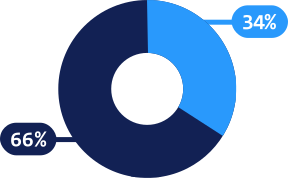
“What employees really value in benefits isn't always what looks great in a slide deck.”
- Anonymised survey respondent
Engineering teams are evolving in an AI-driven world. Companies are keeping teams lean, hiring more intentionally, and focusing on retention: prioritising keeping the right people over sheer headcount.
"I'm finding it harder and harder to find good engineers who care about understanding the underlying concepts."
- Anonymised survey respondent

Developers are evolving faster than the frameworks designed to support them. With repetitive tasks automated, more time is shifting toward high-value work — creating both new opportunities and new gaps in how progression is defined.

“AI, product thinking, and system design are becoming core — coding is just one part of the job now.”
- Anonymised survey respondent
“The real shift is toward higher level thinking – systems, strategy, and problem solving over syntax.”
- Anonymised survey respondent
“The real shift is toward higher level thinking – systems, strategy, and problem solving over syntax.”
A practical snapshot of how pay, progression, and benefits are shifting in South African tech — based on 2,270 real responses from software and data professionals, so you can benchmark with confidence and make informed career or hiring decisions.
Get actionable insights on:
Where salaries actually sit across roles, seniority, and tech stacks
What developers value in benefits — and where packages fall short
How AI is impacting earning potential and career progression
What competitive hiring and retention looks like in today’s market

The report gives you a snapshot of market salaries, but numbers alone aren’t enough. Whether you’re a leader planning your team’s growth or a developer thinking about your next move, this data is most powerful when it sparks informed, confident conversations. We’ll help you navigate those discussions and turn insights into action.
OfferZen is South Africa's largest tech talent marketplace that connects job-seeking software, product, and data professionals with exciting opportunities at over 2000 companies.

OfferZen surveyed developers, data professionals, and tech leaders between 1-30 February 2026 to understand what’s really happening inside South African tech teams. More than 3,500 people responded, with 2,270 responses deemed valid for analysis.
We hosted the survey on Typeform and recruited respondents via email sent to more than 40,000 members of the OfferZen community, as well as through social media posts. Data was anonymised in accordance with GDPR guidelines and is housed separately from any and all of OfferZen’s platform data. Percentages may not always add to 100% due to rounding.
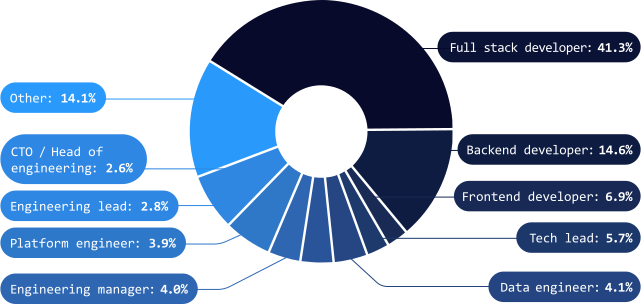
Their role
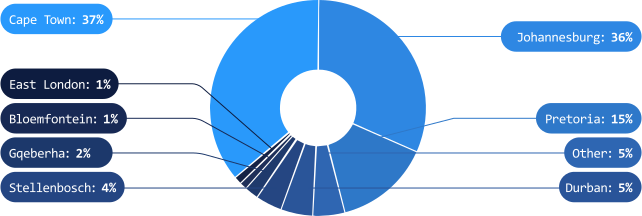
Their city
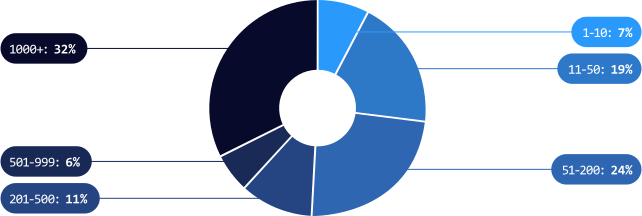
Their company size
Their gender

Responses to the following questions were used in the 2026 State of the Developer Nation: Salary survey.
Salary and compensation
Money talk ahead. Transparency only works if we’re honest.
For rating-based questions, respondents were asked to select 1 if they strongly disagreed with the statement, 3 if they were neutral, and 5 for strongly agreed.
In what bracket is your current monthly salary (cost to company, before tax)?
How do you feel about your current compensation?
When does your company review or apply salary increases?
What was your most recent annual salary increase?
Did you receive an annual bonus?
What was the value of your bonus?
In the last year, which of the following describe how you’ve approached job decisions or actions?
My ability to work with AI-related tools or concepts has positively affected my earning potential.
In what ways, if any, has AI influenced your compensation, opportunities, or sense of job security?
Benefits and perks
The extras that quietly make work better (or don’t).
For rating-based questions, respondents were asked to select 1 if they strongly disagreed with the statement, 3 if they were neutral, and 5 for strongly agreed.
I find my benefits package useful and relevant to my needs.
Which monetary benefits do you currently receive?
When evaluating a potential role, which monetary benefits matter most to you? Choose 2-4 options
If available, what would you spend your Learning & Development budget on in 2026?
Which perks and benefits do you currently receive? Choose all that apply
When evaluating a potential role, which perks and benefits matter most to you?
How many paid leave days do you get per year?
I value flexibility (remote work and flexible hours) more than salary increases.
What do you think most companies are getting wrong about benefits in tech?
Career progression
The stuff that decides whether you’re levelling up or just looping.
For rating-based questions, respondents were asked to select 1 if they strongly disagreed with the statement, 3 if they were neutral, and 5 for strongly agreed.
Do you have a career progression framework for your role?
I clearly understand what is required to progress to the next level in my role.
How often do you receive feedback from your manager that helps you improve your performance?
My manager can effectively support my career progression.
What shapes how much you trust a manager to support your career progression?
When thinking of a good manager, what matters most to you?
How do you primarily benchmark whether your salary is fair?
How confident do you feel negotiating your salary?
What makes the salary conversation difficult?
Choose your top 3 reasons for staying at a job
I feel that the performance metrics used to evaluate my work are still relevant in the age of AI.
Which best describes how AI has changed your work?
What’s one thing your manager does — or doesn’t do — that has the biggest impact on your growth or progression?
Which best describes your current scope of responsibility at work?
Hiring and retention
How it actually feels to build, reward and keep a team right now.
For rating-based questions, respondents were asked to select 1 if they strongly disagreed with the statement, 3 if they were neutral, and 5 for strongly agreed.
How is your data or engineering team’s headcount likely to change in 2026?
Which of the following best describes your team’s situation in 2026?
What is the biggest factor limiting your ability to hire in 2026?
How much control do you have over compensation decisions (such as salary increases and bonuses) to reward performance in your team?
How do you typically benchmark salaries for roles in your team?
What makes salary conversations most difficult for you as a manager?
Which best describes performance reviews in your team?
How much influence do you personally have over how AI is adopted in your team?
Have you felt a need to change the performance metrics used to evaluate your team in the age of AI?
What's something about salary or progression decisions that you find yourself explaining repeatedly to your team?
Company, industry and skills
Last stretch. Just a few basics about your company, industry and skills, then you’re done.
For rating-based questions, respondents were asked to select 1 if they strongly disagreed with the statement, 3 if they were neutral, and 5 for strongly agreed.
How large is your engineering or data team?
How large is your company?
What industry is your company in?
Which of these languages do you actively use in your current role?
Which skills are becoming more important in your role?


